Stories
•
The Art of Fking Off Forever: A Guide to Becoming a Real Digital Nomad
By Angel Reyes
Yeah, you’ll ask yourself more than once: What the hell am I doing here? Why am I not back home stacking cash, sleeping with my best friends partner, But here’s the truth these moments, far from your comfort zone, force a kind of clarity the 9-to-5 never could. The unpredictability, the solitude, the sheer intensity of being somewhere new…working, traveling it shocks your system awake. It lights something up. This isn’t a detour. It’s fuel. These are the kinds of experiences that stir the imagination and rewire your ambition. You see your own life from the outside. And in that space sitting in some late-night noodle shop, or on a balcony in a city you can’t yet pronounce you don’t just think of ideas. You become the kind of person who can build them.
Becoming a digital nomad from scratch means choosing fire over the slow burn of the everyday grind. Right now, you're probably dropping $2,000–$3,000 a month on a studio in some sketchy edge of Miami maybe a spot that's "up-and-coming" but mostly just noisy, overpriced, and far from anything that feels alive. That cash buys you stress, traffic, and the same four walls staring back at you. Flip the script: the exact same budget or way less puts you in a prime neighborhood in Buenos Aires, Lisbon, Medellín, or Chiang Mai. Think tree-lined streets in Palermo, cafes buzzing with real energy, architecture that hits different, and a pace that actually lets you breathe while you work.In Buenos Aires right now, a furnished studio in a safe, central area like Palermo, Recoleta, or Caballito runs $500–$800 a month often with fast Wi-Fi, security, and that European-South American charm that makes every morning feel like an upgrade.
Total monthly burn for a single person living well? $800–$1,200 if you play it smart: hit local markets for fresh produce and meat that tastes like it should, ride the subte or buses, grab empanadas or asado from street vendors instead of tourist traps. It's not deprivation it's smarter living. You get quality food, culture on tap, and cash left over to invest in yourself or the next idea.The catch? You need reliable remote income that doesn't evaporate when you cross borders. Entry-level remote jobs in sales or customer support can start at $20–$30 an hour solid enough to cover basics abroad and give you runway. That's the floor. To climb higher, grab better roles, and stop scraping by, arm yourself with credentials that cut through the noise.Forget waiting for a degree. Jump into Google Career Certificates on Coursera IT Support, Digital Marketing & E-commerce, Project Management, Data Analytics, Cybersecurity, or AI Essentials.
These are self-paced, practical, and employers love them. Many finish in 3–6 months at 10 hours a week, some faster if you're locked in. Cost? Around $49/month subscription (total $150–$300 depending on speed). Meta's Social Media Marketing Professional Certificate? Same platform, beginner-friendly, packs in AI tools now, and takes about 5 months at 5–10 hours weekly often less if you grind. IBM throws in strong AI and data certs too. Stack a couple in fields that light you up digital marketing, social media, basic tech and suddenly you're not "no experience"; you're qualified for $50k+ remote gigs that actually fund adventure.Your resume becomes your weapon. Don't list jobs like a robot tell the story.
That time you hunted down the package thief in your building? Spin it as "exercised persistence, research, and conflict resolution to secure community assets." Weave in passions, side projects, adaptability—the hunger that drives you. Make it professional but real; let personality bleed through.Applications? Skip the lazy apply-button spam. Hunt the job that fits, then go aggressive: stalk the recruiter's LinkedIn, craft a sharp message, or call the company direct. "I'm the person who'll overdeliver—here's proof." The relentless cut lines. Entry-level remote sales or support roles are everywhere if you've got the certs and the fire.Build your base first: stash 3–6 months of lean expenses as an emergency fund. Lease ending, no car payment? That's your window jump. Layer in side income: document the journey posts, threads, short videos and pitch sponsors. A startup luggage brand, sunnies company, or supplement line might throw $100/month your way. In low-cost spots, that's serious leverage: weeks of street eats, coffee that wakes you up, maybe a night out that sparks the next connection.Pushback will come. "You're just escaping reality."
"Living cheap in a 'third-world' spot isn't winning." Let it roll off. Most of that talk is envy dressed as advice—they're anchored, you're free. Solitude will hit friends stay home with their bills, you'll eat alone in new plazas, face those raw "why am I here?" nights. Embrace it. That's where clarity hits hardest. Defying the 9-to-5 script strips everything down, sharpens purpose, and lights entrepreneurial fuses you didn't know were there. Ideas flood in. Businesses take root.Plan the logistics like a pro. Scout Airbnb or local listings months ahead for the best rates—lock in that Buenos Aires studio early. Prioritize killer Wi-Fi (check reviews, speed tests), safety (read nomad forums), and vibe (places with other remote workers to kill isolation).
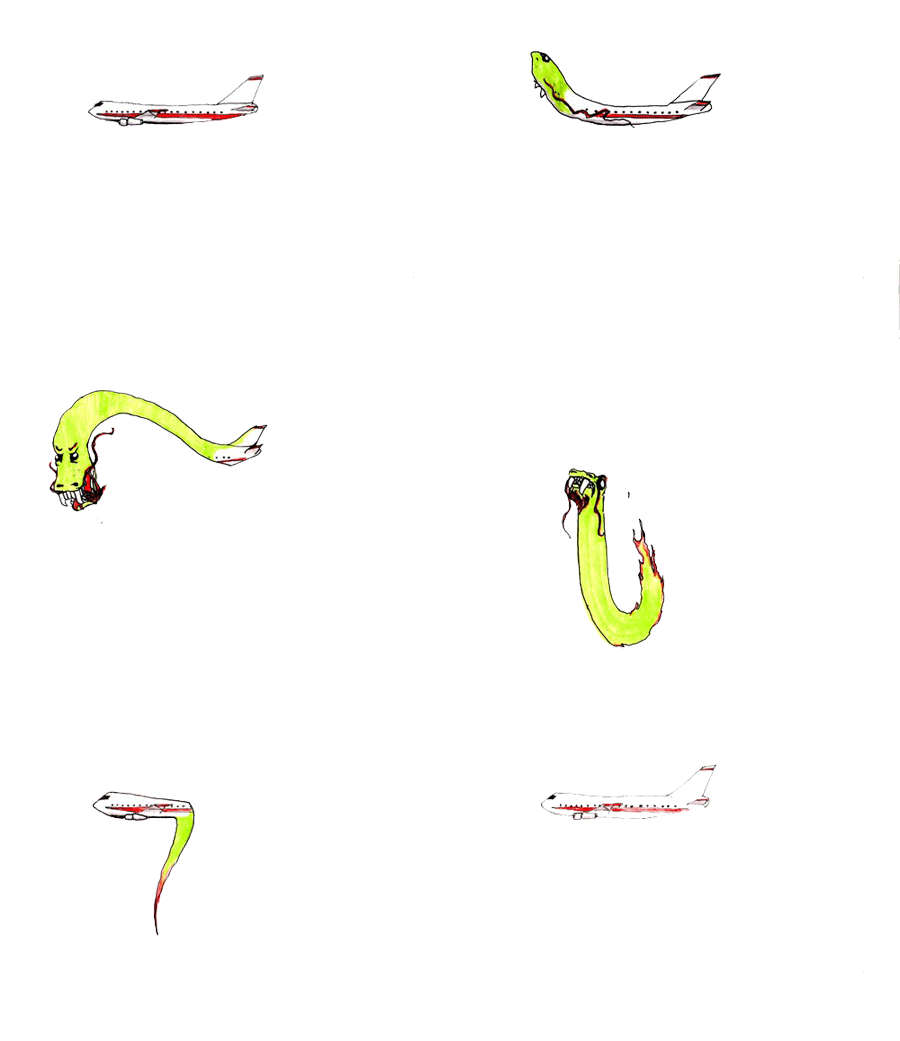
Live local: markets over malls, walking over Ubers. Board the plane. Step off into somewhere new. Meet strangers who become friends. Work from a spot overlooking a city that pulses.The old life will wait if you ever want it back. But this—freedom to chase horizons, build on your terms, collect stories that matter—doesn't. Pack light. Move hungry. Prove every doubter wrong.Your move—what's first?
Share
Copy link
This article may contain affiliate links. If you buy through them, we may earn a commission at no extra cost to you.